

Small treats become expensive habits because repeated emotional spending rarely feels dangerous in the moment.
Most people do not suddenly become financially stressed because of one giant purchase.
Sometimes it happens through hundreds of small moments that feel harmless individually.
Milk tea after work.
Coffee before duty.
Extra food delivery add-ons.
Convenience store snacks during stressful days.
Each purchase feels small.
But repeated daily spending quietly grows over time.
Takeaway
Small emotional spending habits are easy to ignore because they rarely feel expensive immediately.
People naturally react differently to small expenses compared to large ones.
A ₱150 coffee rarely feels financially dangerous.
A ₱90 snack order feels manageable.
Even repeated food delivery fees start feeling emotionally normal after a while.
That’s because the brain focuses on how small each individual purchase feels — not the total monthly pattern.
Small purchases become dangerous when they quietly turn into automatic habits.
One of the biggest spending traps is the phrase:
“Okay lang. Maliit lang naman.”
That mindset lowers financial resistance.
Because emotionally, small purchases feel easier to justify.
Especially during stressful days or emotionally draining work weeks.
That’s why repeated “small rewards” quietly become part of everyday routines.
Many daily purchases are emotionally connected to comfort and stress relief.
People often buy:
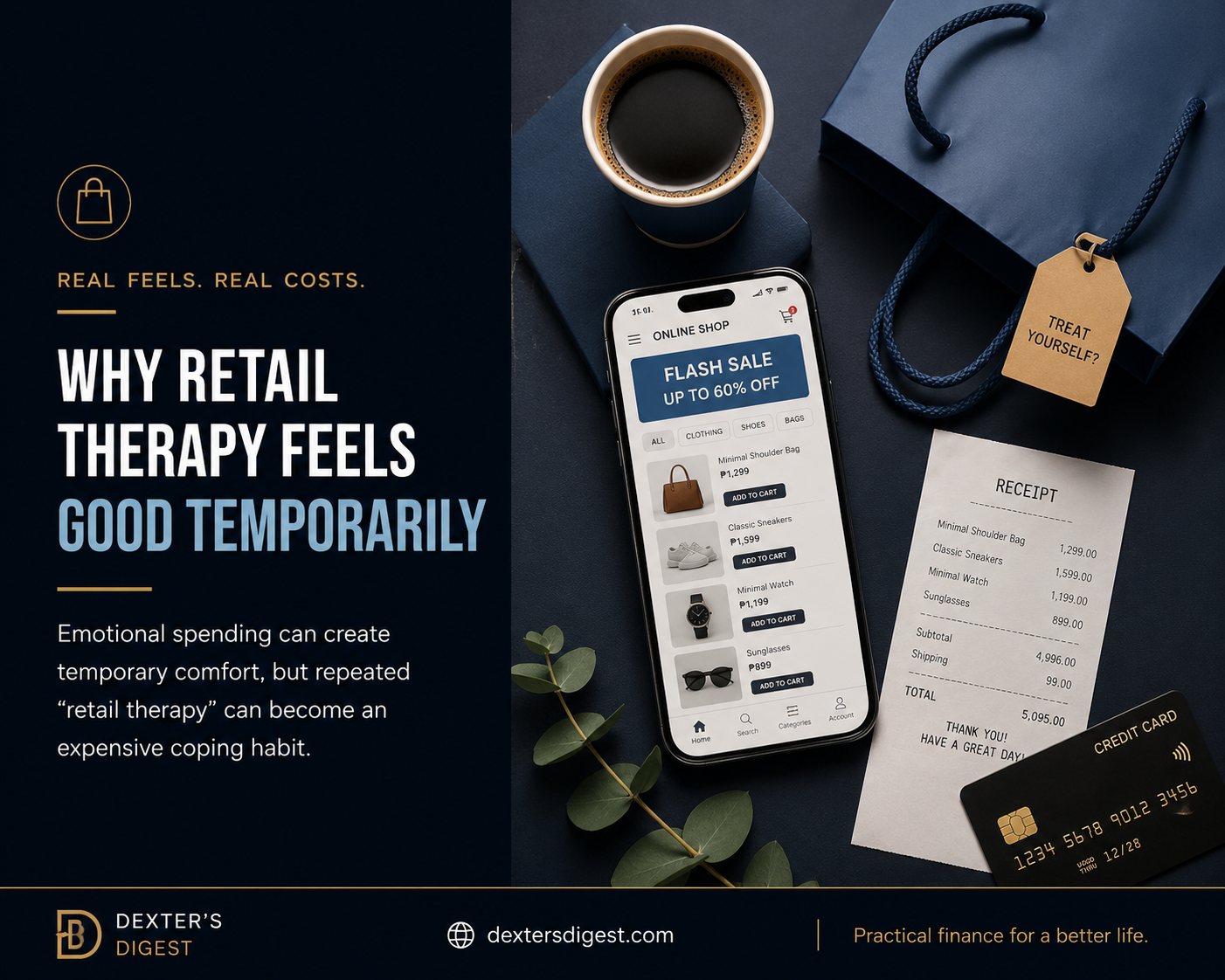
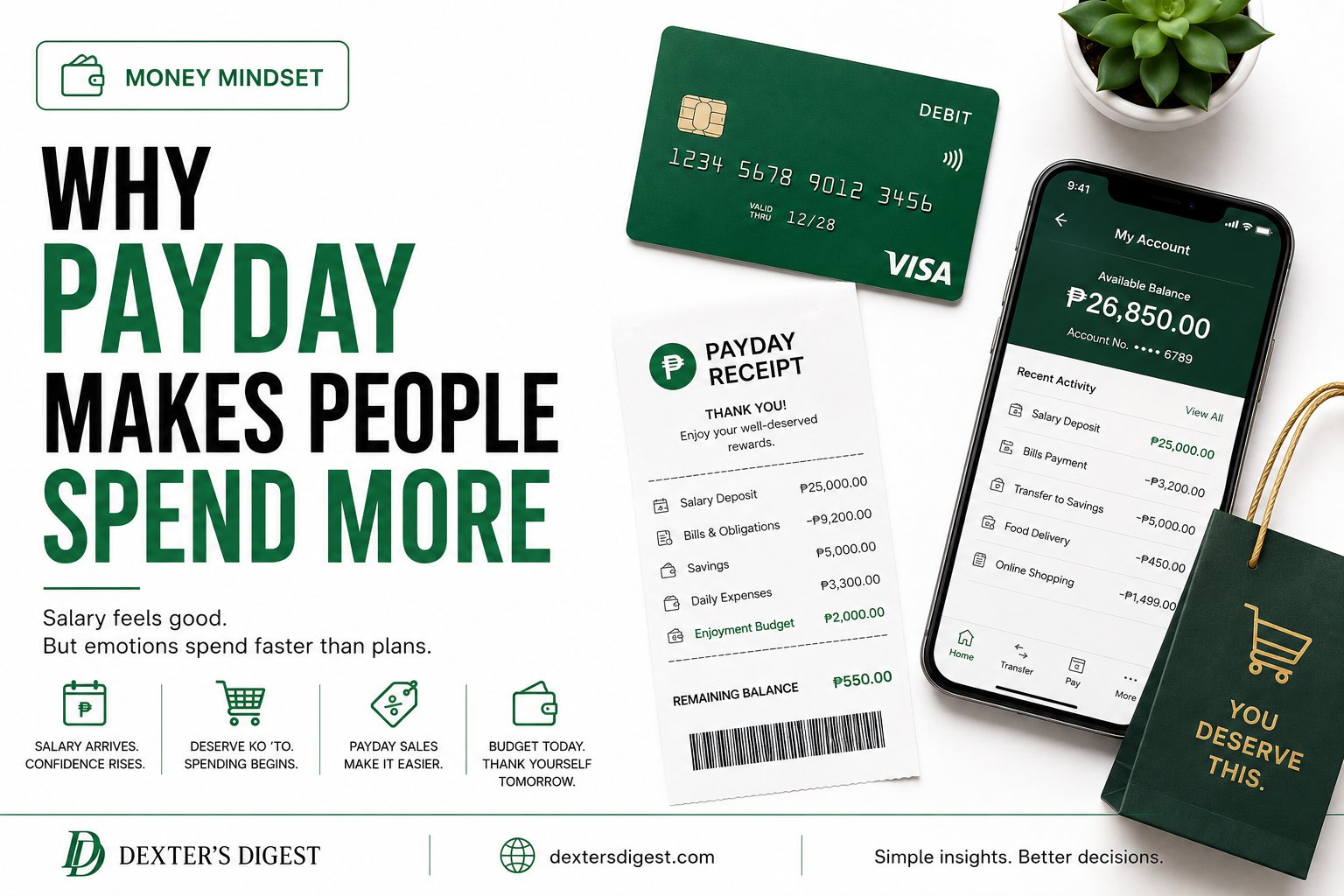
This becomes even more dangerous when combined with retail therapy habits and payday spending psychology.
Because emotional spending starts feeling emotionally deserved.
The problem is rarely one expensive coffee. The problem is repeating comfort spending without noticing the long-term pattern.
Daily spending becomes surprisingly large when repeated consistently.
A ₱180 coffee habit five times a week becomes thousands of pesos monthly.
Food delivery fees quietly pile up too.
According to Grab Philippines, food delivery and convenience services continue growing because they make everyday purchases faster and easier for users.
And convenience almost always encourages more frequent spending.
Especially when purchases become emotionally automatic.
Not all small treats are bad.
Enjoying life responsibly is important too.
The difference is whether spending is intentional or emotionally automatic.
A few healthier habits help:
Small changes in daily habits often create the biggest financial improvements over time.
Small treats feel harmless because each purchase looks affordable on its own.
But repeated emotional spending quietly grows into long-term financial habits.
And once comfort spending becomes automatic, people stop noticing how much money slowly disappears every month.
Because sometimes financial stress is not caused by one massive decision.
Sometimes it comes from hundreds of tiny ones repeated every week.
Continue learning:
Explore more in Investing, Money Basics, and Debt.

Seafarer, Farmer & Dad
Hey, I’m Dexter, a seafarer, farmer, and dad navigating money and life. I share practical insights on saving, investing, and managing money better. Here to share what works, what doesn’t, and everything in between.
Leave A Comment