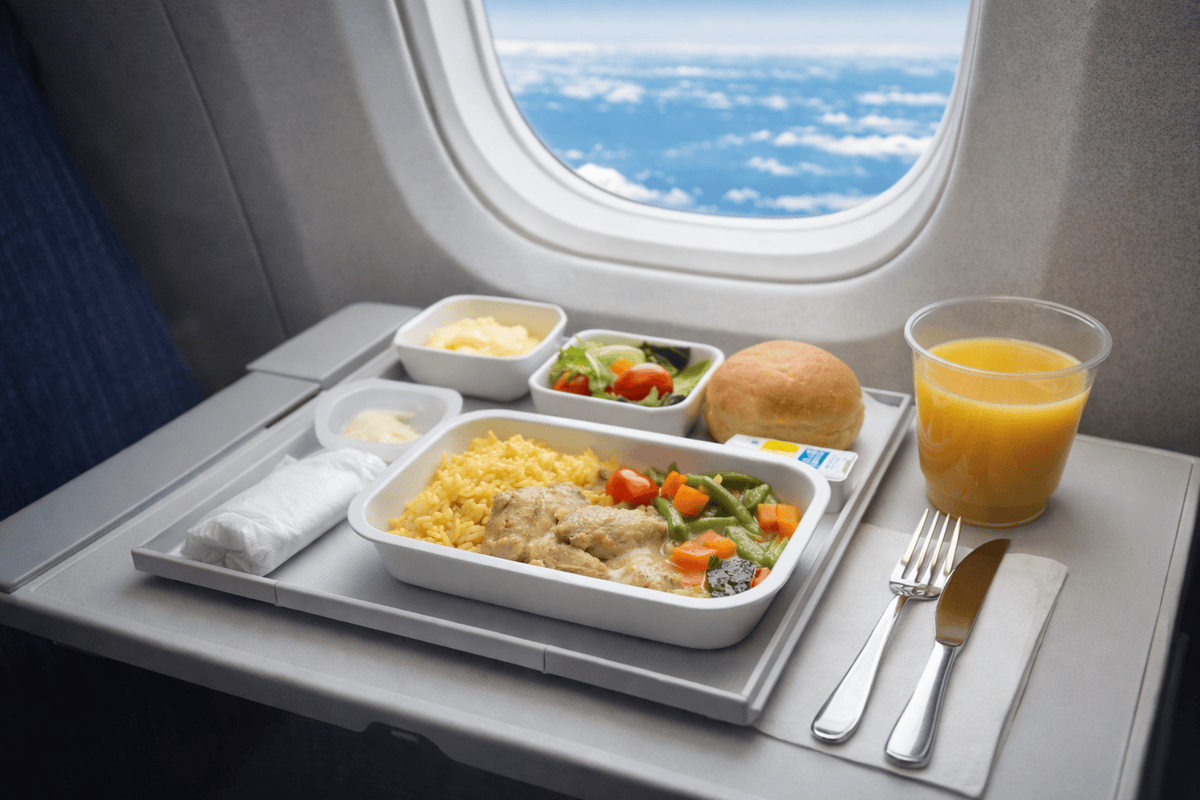
Airplane food often gets a bad reputation, even when airline meals are freshly prepared.
Many passengers wonder why food that tastes fine on the ground suddenly feels bland, muted, or just “off” once they’re in the air.
The truth is, it’s not just the food—it’s your body, the cabin environment, and how taste works at 35,000 feet.
At cruising altitude, the aircraft cabin is pressurized to the equivalent of about 6,000 to 8,000 feet above sea level.
At this altitude:
Because taste and smell are closely linked, food naturally feels less flavorful in flight.
Aircraft cabins have very low humidity—often lower than most deserts.
This dry air:
Even well-seasoned airline meals can taste muted simply because your senses aren’t working at full strength.
Airline meals aren’t random dishes—they’re engineered for altitude.
Airline catering teams design in-flight meals to:
This is why sauces, stews, curries, and tomato-based dishes are common—they hold flavor better than dry foods.
At altitude, your perception of salty and sweet flavors is reduced.
To compensate, airline food often includes:
What might taste perfectly seasoned in the air could taste overly salty on the ground.
Ever noticed that the same dish tastes better after landing?
Once you’re back at ground level:
The food didn’t change—your senses did.
Surprisingly, yes.
Studies suggest that constant background noise, like engine hum, can slightly reduce your ability to perceive sweetness and subtle flavors.
It’s a small effect—but combined with altitude and dry air, it adds up.
Cabin crew hear this comment often: “The food tastes different.”
That’s why airlines test meals both on the ground and in simulated cabin conditions.
The goal isn’t gourmet dining—it’s acceptable, reliable flavor in a challenging environment.
Airplane food tastes different not because it’s bad—but because flying changes how your body experiences taste.
At 35,000 feet, even your senses are operating under aviation conditions.
Understanding that makes airline meals easier to appreciate—and a lot less mysterious.
At altitude, reduced cabin pressure, dry air, and dulled sense of smell all make food taste less flavorful.
Yes. Airline meals are often designed with stronger flavors to compensate for reduced taste perception in flight.
Yes. Cabin pressure and low humidity directly affect your ability to smell and taste food.
Once you return to ground level, your senses recover and flavors become more noticeable.
Background cabin noise can slightly reduce perception of sweetness and subtle flavors.

Just Sharing Life as It Comes
Welcome to Dexter’s Digest—just a space where I share bits of life as they come. Some days it’s travel, music, or random thoughts —other days, just moments that feel worth writing down.
Feel free to browse my posts, or leave a comment. Whether you’re here for a quick read or to follow along for the long haul, thank you for joining me.